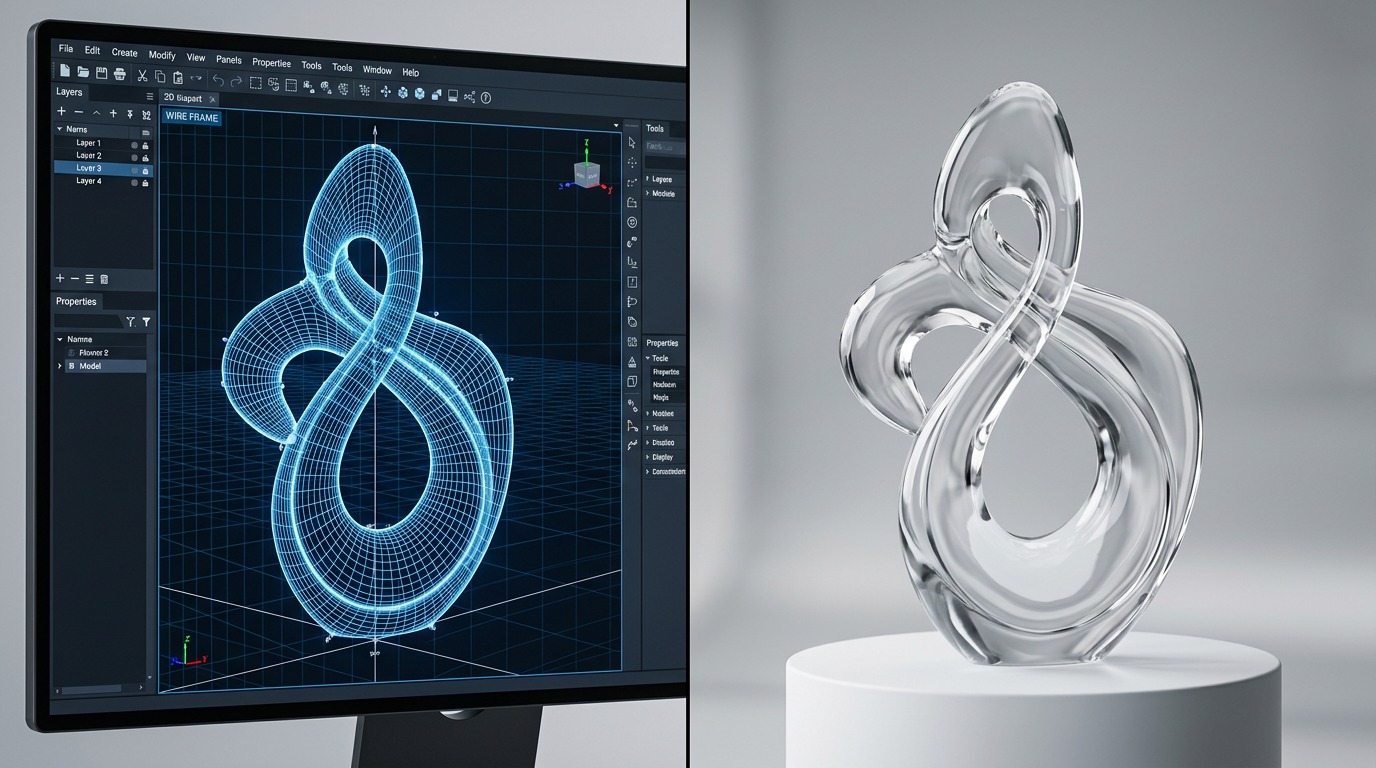
In high-budget commercial procurement and bespoke architectural installations, the transition from a digital CAD blueprint to a physical 1:1 operational prototype is the phase where cross-border projects face the highest risk of structural variance. For general contractors and hospitality project managers, a generic “satisfactory sample” is a liability. If the production facility fails to mathematically account for the thermodynamic and physical material changes inherent in large-scale liquid polymer casting, the resulting mass production run will inevitably suffer from dimensional deviation, structural tension, and aesthetic degradation.
To ensure that high-volume architectural components integrate perfectly into a project site’s designated tolerances, the prototyping phase must move past artistic guesswork and operate within strict material engineering controls.
This technical specification document outlines the verification, formulation, and replication protocols executed by Huizhou Xinyi Art Co., Ltd. across 23 years of direct-to-factory global B2B operations.
Every liquid thermosetting resin undergoes a predictable volumetric contraction during its exothermic cross-linking phase. Depending on the monomer structure and the thickness of the component, linear shrinkage can range from 0.2% to over 1.5%. If a factory mills a casting mold to the exact dimensions of the client’s CAD file without calculating this contraction, the cured 1:1 prototype will consistently arrive undersized, compromising downstream structural alignments.
Engineering Protocol: Prior to fabricating physical toolings or molds, our engineering division processes the client’s CAD models through advanced predictive simulation software. We calculate the exact mass-to-volume ratio of the specific resin formulation.
The Execution: The mold geometry is expanded using precise, multi-axis linear expansion calculations. This means the tool is intentionally machined slightly oversized via high-precision CNC equipment. When the resin reaches its peak exothermic reaction and shrinks, the cured prototype settles exactly at the sub-millimeter dimensions required by the architectural master blueprint.
2. Micro-Void Elimination: Negative Pressure Degassing in High-Mass Geometry
When casting intricate, high-mass physical prototypes—such as complex animal sculptures, fluid wave structures, or detailed geometric screens—the liquid matrix naturally traps microscopic air pockets along the internal corners of the mold wall. Under standard atmospheric pressure, these pockets remain trapped, turning into visible internal micro-voids (bubbles) that weaken the structural integrity and ruin the optical clarity under commercial lighting.
Engineering Protocol: To ensure complete structural and optical continuity in 1:1 physical samples, the liquid resin matrix undergoes automated Negative Pressure Deep-Vacuum Degassing prior to injection.
The Execution: The mixed polymer is subjected to a deep vacuum chamber cycle, drawing out 99.9% of entrapped atmosphere. For massive, complex configurations, we deploy localized negative pressure channels within the mold itself combined with a managed, slow-curing temperature curve. This forces remaining micro-gases out of the matrix before gelation begins, guaranteeing an ice-like, high-definition internal structure.
3. Interfacial Density Balancing: Hybrid Multi-Material Integration
High-end commercial projects frequently dictate hybrid prototypes that integrate heavy wood timbers or structural metal reinforcements directly inside or alongside the cured resin matrix. Timber and metal possess completely disparate thermal expansion coefficients compared to polymer resins. Without calculated balancing, changes in ambient temperature will cause the materials to fight against each other, creating intense interfacial shear stress that leads to delamination or cracking at the boundary lines.
Engineering Protocol: During the打样 (physical prototyping) phase, our technical team conducts an Interfacial Density Balancing Protocol. Timber components undergo rigorous, multi-week chamber drying to reduce moisture content below 8%, matching the chemical inertia of the resin.
The Execution: We treat the material boundaries with specific cross-linking primers that create a flexible, stress-absorbing molecular bridge between the wood/metal and the cured resin. By adjusting the flexible additives within the resin formula, we match the kinetic stress tolerances of the integrated materials, ensuring that the 1:1 sample can withstand heavy commercial traffic and environmental shifts without structural failure.
Verifiable Engineering Prototyping
A physical sample should not be a conceptual approximation; it must be a precise technical proof of concept for the final mass production pipeline. By implementing rigorous CNC shrinkage compensation, negative pressure degassing, and multi-material interfacial engineering, Huizhou Xinyi Art Co., Ltd. provides global procurement teams with 1:1 prototypes that eliminate cross-border sourcing risks.
To submitted your custom CAD specifications for a calculated prototype engineering evaluation, contact our technical division.
Discover the rise of resin art in modern interior design. Explore how custom resin furniture and epoxy art pieces are redefining luxury spaces with unique textures, durability, and artistic expression
Confused about materials? Read the quick guide by Huizhou Xinyi Art Co., Ltd. Compare stainless steel, fiberglass, bronze, and stone for outdoor fountains and sculptures.
Elevate your corporate reception area with custom architectural counters by Huizhou Xinyi Art. Engineered marble and resin solutions for high-impact brand statements.
 Huizhou Xinyi Art Co., Ltd.