 Huizhou Xinyi Art Co., Ltd.
The Heartbeat of the Night
0Upgrade your bar with custom backlit resin counters. Durable, food-safe, and Instagrammable. Expertly crafted by Huizhou Xinyi Art for global delivery.
View detailsSearch productSearch post
In contemporary hospitality design, color is no longer merely a decorative element—it is a psychological driver that shapes spatial atmosphere and human behavior. Modern lounge and nightclub concepts increasingly leverage translucent resin surfaces to manipulate light and hue, creating immersive environments that evoke specific emotional responses.
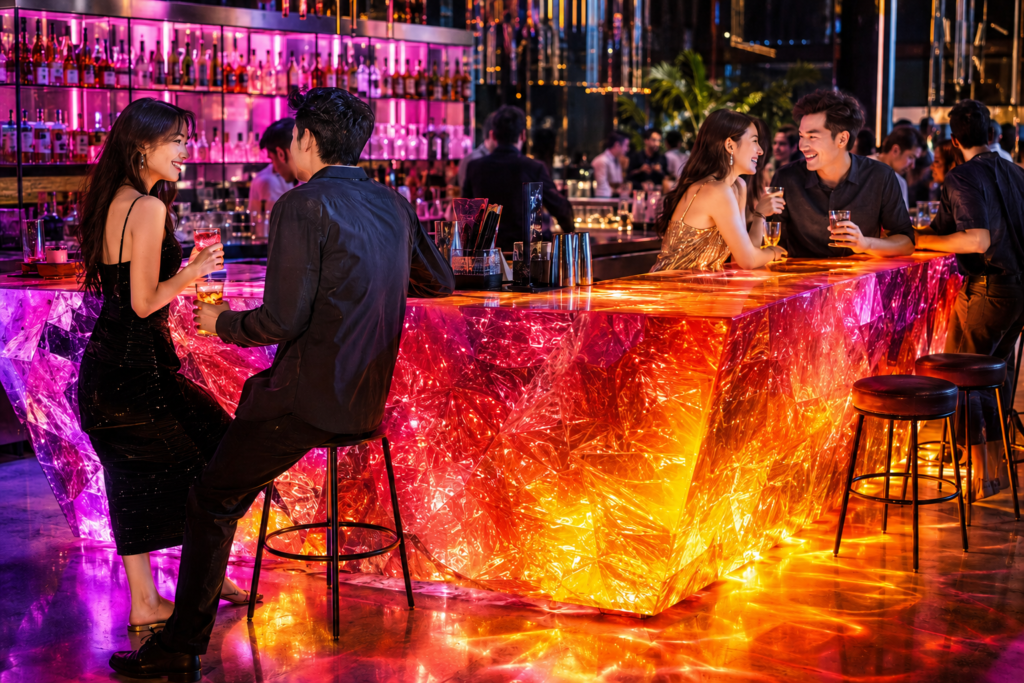
Engineered liquid resin allows for precise control over color saturation, transparency, and internal gradient transitions, making it a powerful material for designers seeking to curate targeted guest experiences.
Unlike opaque traditional materials such as timber, marble, or metal, translucent polymer resins interact dynamically with ambient light. This interaction alters spatial perception and subtle emotional cues.
The visual atmosphere around the bar directly impacts guest behavior, order velocity, and overall retention.
Translating a designer’s color palette into a heavy-section resin casting requires rigorous material formulation and process control.
Delivering bespoke color-infused resin bar counters for international commercial projects requires a combination of artistic color matching and precise polymer chemistry. Maintaining color consistency across multi-panel installations and ensuring resistance to heavy commercial wear are critical to long-term project success.
At Huizhou Xinyi Art Co., Ltd., we partner with hospitality designers, architects, and FF&E buyers to fabricate custom-tinted resin counters, backlit panels, and architectural feature elements. By precise control over pigment dispersion and structural formulation, we transform color concepts into durable commercial installations.
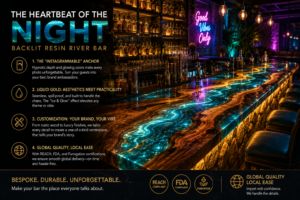
Upgrade your bar with custom backlit resin counters. Durable, food-safe, and Instagrammable. Expertly crafted by Huizhou Xinyi Art for global delivery.
View details
Discover eco-conscious resin furniture by HUIZHOU XINYI ART CO., LTD. We specialize in sustainable, custom-made resin art pieces for luxury interiors, combining durability, design, and environmental responsibility
View details
Discover how bespoke glowing resin bar tops elevate modern bars and nightclubs. High-impact visuals, tactile luxury, and commercial durability for high-traffic venues.
View details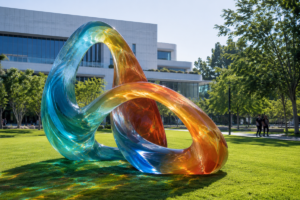
Explore bespoke resin sculpture installations for urban parks, public plazas, and commercial developments. Discover translucent art designed for striking landscape integration and daylight interaction.
View details