Meta Description: Planning a monumental outdoor sculpture for a commercial park? Explore essential engineering standards—from 304 vs. 316 stainless steel selection and IP67 waterproofing to structural wind load engineering and long-term corrosion prevention.
Introduction
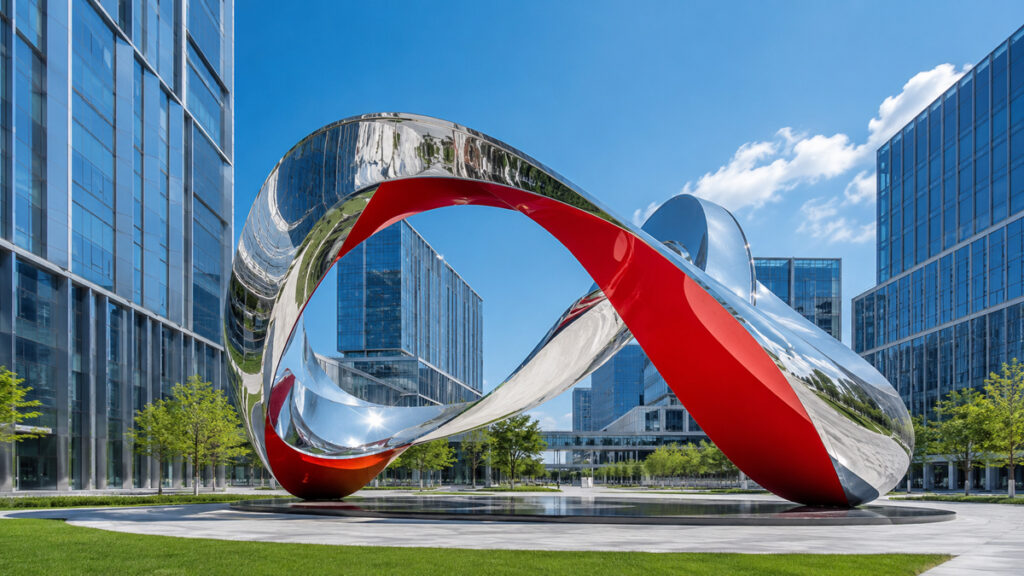
When developers and architectural teams invest in monumental outdoor sculptures for business parks, innovation hubs, or commercial plazas, expectations extend far beyond pure aesthetics. Unlike interior artwork, outdoor metal art installations are exposed 24/7 to harsh environmental conditions—ranging from intense UV radiation and driving rain to high wind loads and atmospheric pollution.
At Huizhou Xinyi Art Co., Ltd. (https://xyresin.com/), we believe a successful public art installation must balance striking visual identity with uncompromising structural engineering and durability.
Understanding the key technical considerations behind custom metal sculpture manufacturing ensures that your commercial park’s visual centerpiece remains safe, pristine, and maintenance-free for decades.
1. Material Selection: 304 vs. 316 Grade Stainless Steel
Selecting the correct alloy grade is the foundational step in engineering durable outdoor artwork. While stainless steel is naturally rust-resistant, different atmospheric conditions require specific metallurgical properties.
Grade 304 Stainless Steel: The standard workhorse for urban, inland, and temperate business park environments. It offers exceptional tensile strength, structural rigidity, and excellent resistance to organic chemicals and industrial atmospheres.
Grade 316 / 316L Stainless Steel: Essential for coastal installations, high-humidity regions, or environments exposed to severe air pollution and de-icing salts. Grade 316 contains 2–3% molybdenum, significantly enhancing its resistance to pitting, crevice corrosion, and chloride ion attack.
2. High-Durability Surface Finishes: Mirror Polish vs. Protective Coatings
The exterior finish of an outdoor sculpture is its first line of defense against weathering. Maintaining a vibrant appearance requires industrial-grade surface preparation.
Precision Mirror Polishing (8K Standard): Achieving a true mirror finish involves multi-stage abrasive grinding and hand buffing using specialized polishing compounds. A flawless mirror surface not only reflects surrounding architecture and green landscapes, but its smooth, non-porous structure also prevents airborne pollutants and moisture from trapping on the surface.
Fluorocarbon & Automotive Paint Systems: When vibrant colors (such as high-visibility reds, custom brand colors, or metallic hues) are required, multi-layer coating systems are applied. This includes sandblasting the raw steel, applying a high-adhesion anti-rust primer, and finishing with UV-resistant fluorocarbon (PVDF) or polyurethane topcoats. This prevents color fading, chalking, and peeling under extreme sunlight.
Modern business park sculptures frequently incorporate dynamic LED lighting, integrated water jets, or ambient accent lights to create an impactful night-time visual landscape.
To guarantee electrical safety and continuous operation in wet outdoor conditions:
IP67 Waterproof Standard: All embedded lighting fixtures, internal wiring, junction boxes, and power supplies must comply with IP67 ingress protection standards. This ensures full protection against dust ingress and resistance to water submersion up to 1 meter depth.
Moisture Management & Ventilation: Temperature fluctuations create condensation inside hollow steel sculptures. Professional engineering incorporates hidden lower-tier drainage ports and internal anti-corrosion primer coatings to prevent water pooling and interior corrosion.
4. Structural Integrity & Wind Load Calculations
Monumental sculptures—often spanning over 5 to 18 meters in height or length—act as large wind sails. Structural failure is simply not an option in crowded commercial plazas.
Internal Steel Skeletons: A custom-engineered internal steel truss or heavy-gauge pipe framework is calculated to transfer wind, seismic, and gravitational forces safely to the ground foundation.
Finite Element Analysis (FEA): Advanced engineering simulations test how the sculpture handles local extreme wind velocities. The thickness of the stainless steel skin (typically 2.5mm to 4mm depending on scale) and internal rib spacing are adjusted according to these calculations.
Anchor Bolt & Foundation Engineering: Detailed embedment bolt drawings and foundation reaction forces are provided to civil engineering contractors, ensuring precise seamless mounting during site installation.
Conclusion: Built for Decades of Visual Impact
A monumental outdoor sculpture should be an enduring asset for any commercial park or corporate campus—not a future maintenance liability. By prioritizing material integrity, IP67 waterproofing, advanced surface treatments, and rigorous structural engineering, developers can ensure their vision stands the test of time and weather.
Planning an outdoor metal sculpture project? Contact the engineering team at Huizhou Xinyi Art Co., Ltd. today or visit https://xyresin.com/ to submit your concept drawings, structural requirements, and technical specifications.
Elevate your hotel lobby with custom resin art reception desks. Discover why top designers like ABLE / VIP Saloti choose Huizhou Xinyi Arts for high-end, durable, and one-of-a-kind commercial furniture solutions. Explore our hospitality projects t...
Discover why global project managers bypass brokers. Work directly with Huizhou Xinyi Art for custom heavy-pour resin furniture, transparent engineering & zero-risk logistics.
Upgrade your bar with custom backlit resin counters. Durable, food-safe, and Instagrammable. Expertly crafted by Huizhou Xinyi Art for global delivery.
An entertainment venue design guide from Huizhou Xinyi Art on engineering oversized luminous resin bar counters and monolithic backlit DJ booths that drive guest engagement and venue revenue
 Huizhou Xinyi Art Co., Ltd.